


 1076
1076  10 мин

Введение
Изучение материнского поведения млекопитающих дает представление о необходимых взаимодействиях между матерью и потомством, а также об уровне зависимости между ними. У зрелорождающихся и незрелорождающихся видов это поведение будет отличаться. Существуют две основные причины, почему настолько важно правильное материнское поведение суки. Во‑первых, щенки рождаются беспомощными, глухими, слепыми и с ограниченной двигательной способностью (т. е. относятся к незрелорождающимся), поэтому их выживание полностью зависит от внешнего источника. У домашних собак, в отличие от бродячих и некоторых диких псовых, выращиванием потомства занимается в основном мать, поэтому выживание щенков напрямую зависит от качества материнских способностей (при условии невмешательства человека). Во‑вторых, поведение матери может повлиять на будущее развитие ее потомства. Недавние исследования не являются окончательными, но позволяют предположить, что материнские качества напрямую влияют на когнитивное развитие и способности щенка (1–3).
Материнское поведение собак изучается уже не одно десятилетие (4–6) и, по общему мнению, представляет собой реакцию на потребности новорожденных. Его основные аспекты включают в себя непосредственный контакт (для терморегуляции щенков), оральное взаимодействие (путем вылизывания), а также кормление, игру и обучение щенков. Тем не менее недавно появилась концепция влияния материнского ухода на когнитивное развитие собак. Проведен ряд исследований (1–3, 7, 8) в попытке определить, как раннее взаимодействие с матерью может повлиять на когнитивные способности щенков, насколько длителен этот эффект и насколько велико его влияние на будущие показатели и поведение взрослых собак. Следовательно, ненадлежащий материнский уход может быть причиной нежелательного поведения в дальнейшем. В этом обзоре основное внимание будет уделено общим аспектам материнского поведения во время родов и в течение первых недель жизни щенков, а также обсуждению того, как материнский уход может влиять на когнитивные способности и темперамент собаки.
Приближение родов
Изменения в поведении беременной суки могут появиться за один или два дня до родов (9), но эти признаки не всегда очевидны, в зависимости от того, первые это роды у суки или нет. В большинстве случаев она становится беспокойной и за 12–24 часа до родов у нее снижается аппетит. Стремление устроить «гнездо» и окопаться — менее постоянный признак и зависит как от индивидуальных особенностей суки, так и от факторов окружающей среды, а также от уровня контакта с человеком (10). Не удалось установить корреляцию между интенсивностью подготовки к родам и качеством материнского поведения. Другие описанные признаки включают невнимательность, сонливость, агрессию, беспокойство, непредсказуемость, раздражение и повышенную склонность добиваться внимания от владельца, хотя некоторые суки могут предпочесть уединение. По мере приближения родов сука проводит все больше времени в родильной зоне. Снижение температуры тела может вызвать озноб (9), что объясняет другие поведенческие изменения, но использование этого параметра в качестве индикатора родов все еще остается спорным. Предполагалось, что на приближение родов может указывать снижение температуры примерно на 1,0 °C (11), но вагинальные датчики температуры показали, что такое снижение не имеет прогностического значения для начала щенения (12).
Роды
Нормальные роды (эвтоция) — это совокупность физиологических, эндокринологических и поведенческих изменений, кульминацией которых является рождение щенков. Процесс щенения происходит в три этапа, которые явно распознаются по поведению суки. Первый этап — начало субклинических сокращений матки наряду с расслаблением влагалища и раскрытием шейки матки, но без признаков сокращения живота. Не все суки на этом этапе проявляют явные признаки, но у некоторых можно наблюдать поведение, имитирующее подготовку к приближающимся родам, например перекладывание подстилки в попытке построить «гнездо». Продолжительность этого этапа может зависеть от количества предыдущих родов и достигать 36 часов у нервной первородящей суки (9), но обычно составляет 6–12 часов. Второй этап представляет собой активный родовой процесс и характеризуется сильными и скоординированными сокращениями живота, сопровождаемыми вокализацией суки и выделением плодной жидкости. Как только шейка матки полностью раскрыта, присутствие первого щенка у шейки инициирует рефлекс Фергюсона и вызывает выброс окситоцина с сокращением мышц живота, что приводит к родам.
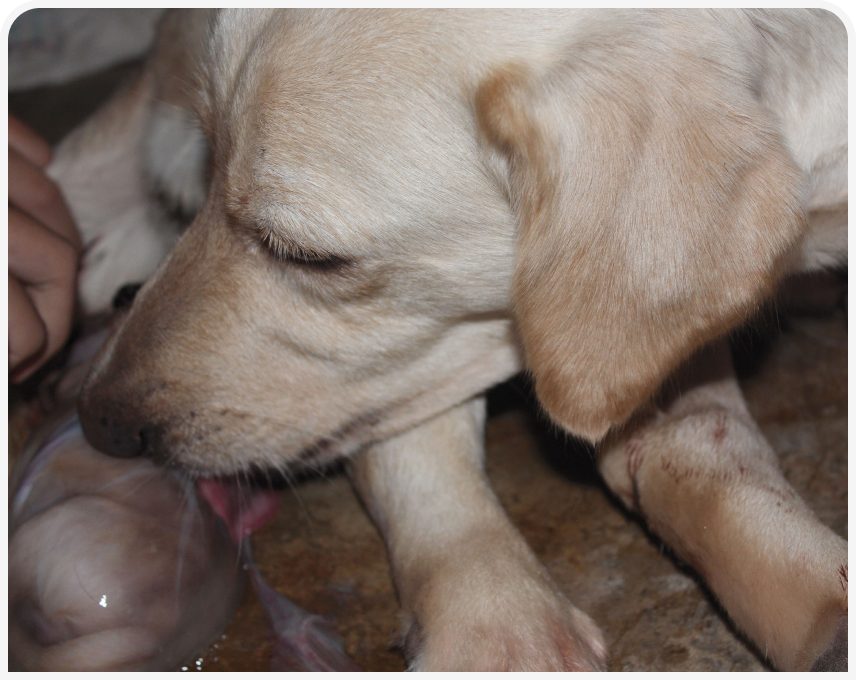
После рождения щенка сука должна разорвать амниотический мешок (если он не разорвался во время родов) (Рисунок 1); щенки, оставшиеся в плодных оболочках, могут умереть в считанные минуты, если их быстро не освободить. Сука также должна разорвать пуповину и энергично вылизать новорожденного щенка (9). Это важно как для стимуляции дыхания, так и для обсушивания щенка, а также для установления материнской привязанности. Неопытность (у первородящих сук) и высокий уровень беспокойства во время родов могут нарушить материнское поведение и привести к повышенной смертности щенков. Весь процесс должен повторяться до тех пор, пока не родятся все щенки, при этом сука должна прерывать уход за новорожденным, когда возобновляются схватки при появлении следующего щенка.
На самом деле сука может полностью сосредоточиться на процессе щенения и казаться нечувствительной к писку щенков (4), пренебрегая пометом до полного завершения второго этапа (5). Как правило, первый щенок рождается в течение 1–2 часов после начала второго этапа, хотя это может занять и до 4 часов. Общая продолжительность второго этапа варьирует в зависимости от размеров помета, но может составлять до 12 часов, при этом любой стресс или беспокойство способны прервать или остановить процесс (4, 5).
Третий этап — изгнание плодных оболочек, которое может происходить после каждого щенка или после рождения двух или трех щенков. Если ей позволят, сука съест плаценту, что для плотоядных важно по нескольким причинам: в целях гигиены, как источник энергии для суки (4) и (возможно) для меньшего привлечения хищников.

Поведение матери в раннем послеродовом периоде
По окончании родов сука должна проявить набор вариантов поведения, который обеспечит выживание, рост и развитие щенков (13). Исследования материнского поведения, как правило, сосредоточены на легко поддающихся измерению аспектах, таких как ороназальные взаимодействия (облизывание или подталкивание носом щенков), время, проведенное с пометом (как в тесном контакте, так и в зоне родов), а также продолжительность кормления и положение суки во время кормления. Хотя материнское поведение важно до момента отъема, в этой статье особое внимание уделяется неонатальному и переходному периодам; в это время щенки больше всего зависят от матери, и именно на этом этапе характер суки и ее материнские способности могут радикально повлиять на развитие щенков. Неонатальный период (определяемый как дни 1–16) представляет собой адаптацию к внеутробной жизни, в то время как переходный период начинается с открытием глаз и характеризуется развитием слуха и неврологических навыков (10). К концу этого периода органы чувств щенка становятся полностью функциональны, при этом уровень его зависимости начинает снижаться по мере усиления его исследовательского поведения.
Ороназальное взаимодействие
Первое взаимодействие суки с новорожденным щенком — это груминг (4, 6, 9). Как обсуждалось выше, он не просто имеет решающее значение для выживания щенка, но и инициирует связь с матерью. Считается, что вылизывание стимулирует мочеиспускание и дефекацию у щенка в первые три недели жизни (6, 9, 14). Кроме того, с помощью вылизывания мать будит щенков, когда готова их кормить, и направляет к молочным железам. Сука продолжает вылизывать щенков как минимум до отъема, хотя со временем такое поведение ослабевает, а примерно к трехнедельному возрасту щенки способны самостоятельно справлять естественные потребности.
Вполне возможно, что частота и/или продолжительность груминга могут повлиять на когнитивное поведение щенков. В некоторых работах активность вылизывания использовали для оценки материнского поведения (1–3, 7), однако не удалось установить прямую корреляцию. Тем не менее исследования на грызунах показали, что чем чаще мать вылизывает потомство, тем лучше оно приспособлено к стрессу и тем активнее сигнальные пути между генами, связанными с обучением и памятью.
Продолжительность контакта
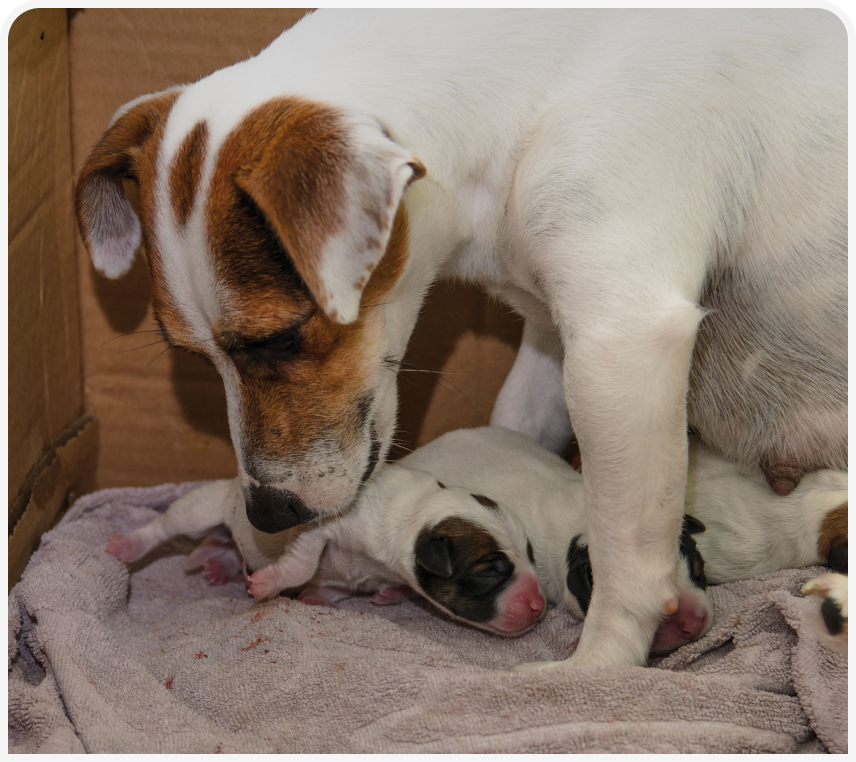
Еще одним важным проявлением материнского поведения является поддержание тесного контакта с щенками. Молодая мать будет неохотно покидать родильную зону (Рисунок 2) по крайней мере в течение трех дней после родов (5, 6, 8, 14), после чего она постепенно возобновляет свою повседневную деятельность, чаще оставляя щенков.
В это время она может усиленно защищать своих щенков, особенно от незнакомцев (4). Тесный контакт с матерью очень важен для предотвращения гипотермии у щенков; поскольку у новорожденных плохая терморегуляция, им крайне необходим источник тепла (от суки и/или из окружающей среды), чтобы согреться. Гипотермия у новорожденного может угнетать определенные функции организма, в том числе пищеварение и дыхание. Наблюдается физиологическое снижение температуры тела щенка сразу после рождения (15), после чего она постепенно повышается до 35–37 °С, что является нормой для новорожденных щенков на 7-й день. Со временем зависимость от внешнего тепла уменьшается, но, по‑видимому, источник тепла, позволяющий поддерживать стабильную температуру тела, необходим щенкам вплоть до 4-й недели жизни (16).
Забота о потомстве
У млекопитающих забота о потомстве фактически зависит от поведения самки. Уход и вскармливание — взаимосвязанные процессы, поскольку щенок сосет молоко в ответ на заботливые действия матери. Вскармливание необходимо для выживания потомства, обеспечивая не только питание, но и передачу колостральных антител в первые 24 часа после рождения. Это одно из проявлений материнской заботы, контролируемое как гормональным статусом, так и центральной нервной системой (17). Выработка молока может начаться еще до завершения родов, но кормление щенков не является приоритетом для суки, пока роды не закончатся (4). В первые несколько дней после родов сука почти постоянно кормит своих щенков (8,14). В течение первых трех недель после родов сука будет лежать и вылизывать щенков, чтобы стимулировать сосание; это взаимодействие максимально проявляется в ночное время (14). Когда щенки станут полностью подвижными, они сами начнут сосать мать (8, 14), а продолжительность и частота кормлений постепенно уменьшатся.
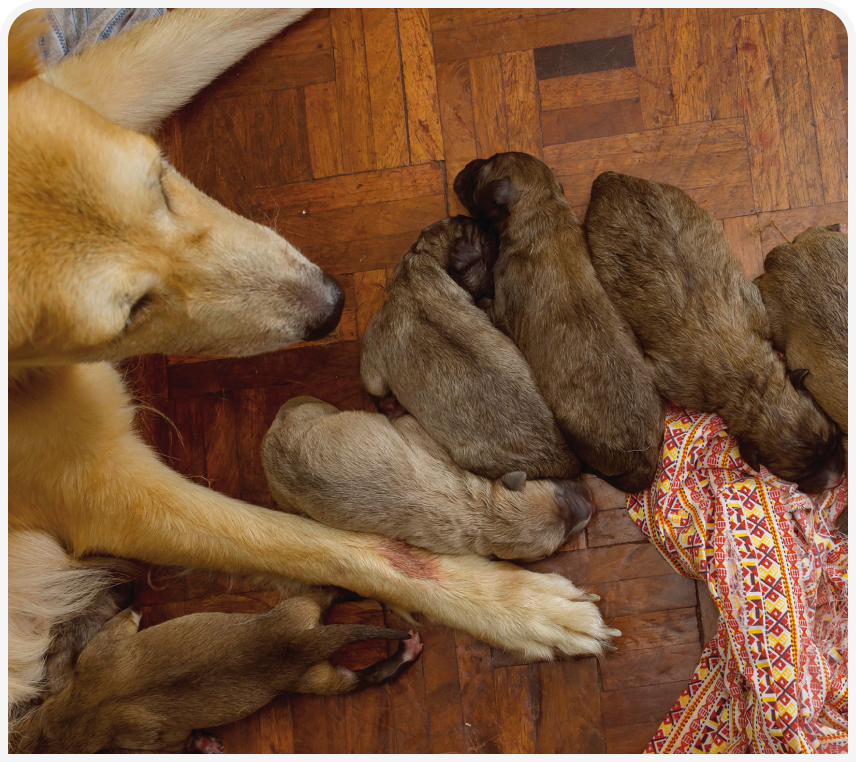
Предпочтительная поза суки для кормления также со временем изменится; сидячее положение чаще наблюдается в течение дня (Рисунок 3), тогда как кормление в положении лежа чаще происходит в ночное время (Рисунок 4) (14). По‑видимому, поза кормления влияет на развитие щенка, но этот вопрос требует дальнейшего изучения. Исследования на собаках-поводырях показали, что щенки от сук, которые предпочитали кормить лежа, с меньшей вероятностью подходили для обучения, чем те, которых мать кормила в основном сидя или стоя (2).
.png "321-SANTOS-Figure-2 (1).png")
.png "321-SANTOS-Figure-2 (2).png")
Щенки регулируют частоту и продолжительность сосания, хотя не удалось установить, есть ли индивидуальные предпочтения у щенков в отношении определенного соска. После кормления щенки просто отпускают соски, но пока они продолжают сосать, сука редко покидает «гнездо», по крайней мере в раннем послеродовом периоде. Примерно через 13 дней сука начнет активно прерывать процесс сосания (17).
Продолжительность материнского поведения
По мере развития щенков частота и интенсивность проявлений материнского поведения снижается (3, 4, 11). Время, затрачиваемое на вылизывание, уменьшается по мере развития щенков (6, 17), равно как и степень контакта, поскольку они все меньше нуждаются в получении тепла от матери, при этом сука проводит больше времени вдали от щенков (14). Продолжительность и частота ухаживания за щенками также будут постепенно уменьшаться (1, 14), и по мере того, как щенки будут становиться сильнее и эффективнее сосать, сука будет чаще оставлять их одних.
Влажные продукты следует вводить примерно в 3–4-недельном возрасте, чтобы приучить щенков к твердой пище и дополнить их рацион, так как выработка молока у суки начнет снижаться. К этому моменту щенки уже способны покидать «гнездо», но продолжают сосать мать. Вероятно, они делают это ради эмоционального удовлетворения, поскольку они уже не нуждаются в ее молоке как источнике питания (18).
Поведение новорожденных по отношению к суке
Основные занятия щенка в неонатальном периоде — сосание матери и сон. После рождения щенки стремятся в теплое место, ищут молочную железу (по‑видимому, ориентируясь на обонятельные сигналы) и пытаются как можно скорее начать сосать. В первые две недели жизни активность новорожденных минимальна, при этом щенки остаются рядом с матерью и друг с другом (или внешним источником тепла), предположительно для поддержания температуры тела; как отмечалось выше, сука обычно сама инициирует взаимодействие с ними (14).
Когда у щенков открываются глаза и их движения становятся более скоординированными, взаимодействие с сукой и однопометниками становится более динамичным (6, 8, 14). Они начинают активно искать мать (6), модели кормления становятся более разнообразными (14), щенки демонстрируют более активное взаимодействие во время игры (с сукой, однопометниками, игрушками и людьми). Скуление и/или вокализация являются признаком стресса (например, холода, голода) и обычно побуждают суку реагировать на потребности щенков. Заводчики могут использовать уровень шума для оценки спокойствия матери (Рисунок 5) (8). Если щенки регулярно скулят, это может указывать на неправильное материнское поведение — например, сука проводит со щенками мало времени и/или затрачивает недостаточно времени на их кормление и вылизывание.
Факторы, формирующие материнское поведение
Материнское поведение можно разделить на две фазы. За критической, или чувствительной, фазой, связанной с важными гормональными изменениями во время родов, следует поддерживающая фаза с преобладающим психосенсорным компонентом, которая длится до момента отъема (19). Пока мало известно о том, что вызывает материнское поведение у собак и чем оно отличается у разных особей, но, возможно, на него влияют различные факторы.
Гормональные факторы и стресс
Родовая деятельность у суки регулируется различными гормонами, которые, вероятно, также связаны с материнским поведением. Однако роль каждого гормона в этих процессах пока недостаточно изучена. Гормональный каскад включает снижение уровня прогестерона, которое инициирует роды, и увеличение секреции эстрогенов, окситоцина, релаксина, пролактина, простагландинов, а также понижающую и повышающую регуляцию рецепторов. В частности, до сих пор неясно, как пролактин и окситоцин регулируют материнское поведение. Окситоцин способствует сокращению матки и, по‑видимому, влияет на качество материнского поведения, что хорошо задокументировано в исследованиях на других видах животных. В одном из исследований на собаках была выявлена связь низкого уровня этого гормона с каннибализмом (20). Уровень окситоцина в слюне не является прогностическим фактором для качества материнского поведения суки (21), но интраназальное введение окситоцина, по‑видимому, способствует проявлению материнского поведения после кесарева сечения (22). Тем не менее пока не проводилось контролируемых исследований, чтобы установить влияние этого гормона и сроки его эффективности. Пролактин, помимо того, что отвечает за стимулирование лактации, вероятно, также способствует проявлению материнского поведения, хотя механизм его действия неясен. Снижение уровня прогестерона, по‑видимому, также имеет значение, поскольку объясняет поведенческие изменения, наблюдаемые при ложной беременности.
Роды и адаптация к материнству могут восприниматься как стрессовая ситуация. Суки в состоянии избыточного стресса, похоже, с большим трудом приспосабливаются к материнству и связанным с ним изменениям. Успокаивающие феромоны могут уменьшить стресс и положительно повлиять на качество ухода за щенками; наблюдения показали, что благодаря феромонам сука охотнее проводит время со щенками, при этом улучшаются отношения матери и потомства в целом (8).
Вагиноцервикальная стимуляция и амниотическая жидкость
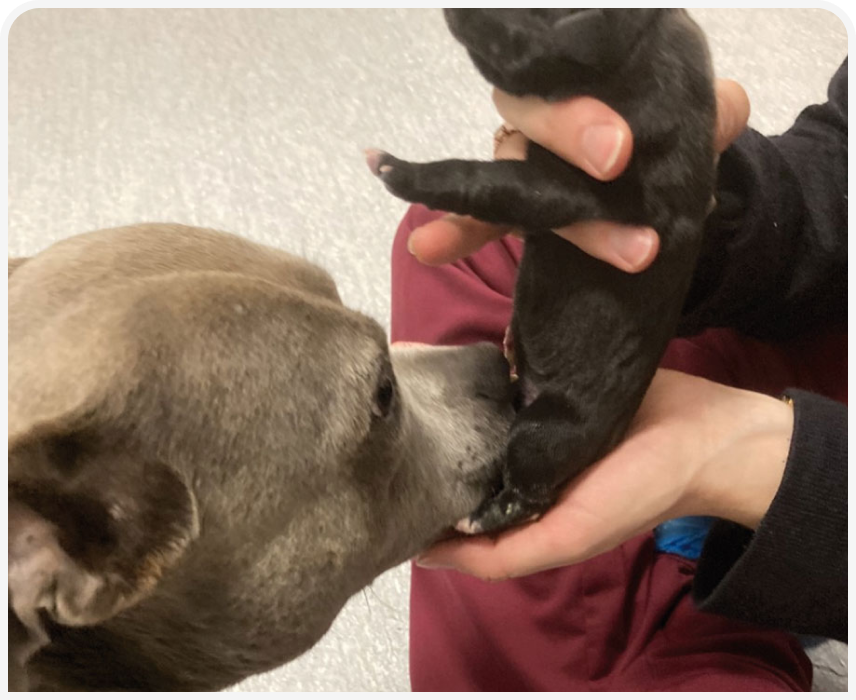
Вагиноцервикальная стимуляция, по‑видимому, важна для материнского поведения, поскольку у сук, перенесших кесарево сечение без начала родовой деятельности, могут возникнуть проблемы с демонстрацией надлежащего взаимодействия со своими щенками, хотя насколько важна эта стимуляция, еще предстоит выяснить (Рисунок 6).
Амниотические жидкости, по‑видимому, также имеют фундаментальное значение для того, чтобы сука приняла своих щенков (4, 23). Если щенка забрать и вымыть после рождения, сука откажется от него, но если новорожденный покрыт амниотической жидкостью, она примет его снова (23), поэтому рекомендуется использовать амниотическую жидкость после кесарева сечения, чтобы сука признала своих щенков.
Количество предыдущих родов и размер помета
По всей видимости, количество предыдущих родов не оказывает существенного влияния на поведение, поскольку наблюдения не выявили значимых различий между первородящими и повторнородящими суками (1, 4). Опытные суки лучше понимают потребности новорожденных и меньше беспокоятся из‑за физиологических изменений, связанных с родами (1). Повторнородящие суки, как правило, проявляют постоянную материнскую заботу, в то время как материнское поведение первородящих улучшается со временем (7). Исследование с участием заводчиков показало, что первородящие суки часто испытывают проблемы с материнским поведением (24), поэтому важно следить за процессом родов, особенно у нервных первородящих, поскольку неопытность суки может привести к тому, что она не сможет правильно повести себя и даже проявит такое отклонение в поведении, как каннибализм. Чем меньше размер помета, тем больше сука контактирует с каждым щенком. Как правило, материнское поведение в таких случаях получает более высокую оценку (1).
Генетика и порода
Генетика может играть важную роль в материнском поведении, но она плохо изучена, и заводчики редко ориентируются на качество материнского ухода в процессе селекции. На взаимодействие суки и щенков может негативно повлиять вмешательство человека, но, возможно, стоит исключать из разведения потомство суки с ненадлежащим материнским поведением. Хотя есть отдельные сообщения о различиях материнских качеств у собак разных пород, этот вопрос не был глубоко изучен. Как показало одно исследование, никакая конкретная порода не отличается особо проблемным материнским поведением (24). Тем не менее золотистые ретриверы оказались лучше немецких овчарок в исследовании, оценивающем материнское поведение и успешность выбора щенков в качестве собак-поводырей (2).
Несоответствующее материнское поведение
Качество материнской заботы может проявиться уже во время родов. Неопытная сука может не знать, как разорвать амниотический мешок и пуповину, что увеличивает вероятность возникновения проблем. Более того, суки, которые не проявляют особого интереса к вылизыванию щенков, также могут демонстрировать ненадлежащее материнское поведение в послеродовой период. Сука обычно выбирает спокойное и безопасное место для рождения щенков, поэтому она может стать агрессивной, если почувствует угрозу. Суки редко нападают на щенков, как правило, они проявляют насилие по отношению к незнакомцам и другим животным в доме. Даже очень послушная сука может проявить признаки агрессии, если воспримет ситуацию как угрозу для своих щенков. Агрессивное поведение по отношению к щенкам если и наблюдается, то обычно в первые дни после родов и, как правило, у первородящих сук. Оно может даже привести к материнскому каннибализму. Потенциальными причинами являются чрезмерный стресс, скученность содержания и недостаточное питание, а также низкий уровень окситоцина и липидов в крови, как зарегистрировано у собак породы кангал с материнским каннибализмом в анамнезе (20). С другой стороны, по опыту автора, нервная первородящая сука при перегрызании пуповины может непреднамеренно убить и съесть своих щенков. Также может наблюдаться недостаток выработки молока (агалактия) — как правило, у первородящих особей, сук, перенесших преждевременное кесарево сечение или страдающих системными заболеваниями, но корреляция между агалактией и ненадлежащим материнским поведением пока не изучена.
Влияние матери на когнитивное развитие
Исследования на крысах подтверждают, что качество и количество взаимодействий с матерью в раннем послеродовом периоде может влиять на физиологическое, когнитивное и поведенческое развитие потомства. Однако неясно, можно ли экстраполировать эти данные на суку и ее щенков, и если да, то в какой степени. Неонатальный и переходный периоды у собак характеризуются быстрым неврологическим развитием, при этом результаты различных исследований, изучающих влияние материнского поведения на развитие потомства, противоречивы (1–3). Предположительно, полученные данные зависят от породы собаки и/или ее основных функциональных характеристик. Так, высокое качество материнского поведения армейских немецких овчарок оказало положительное влияние на когнитивные функции щенков, необходимые для выполнения их работы (1). Однако при отборе собак-поводырей выяснилось, что щенки от матерей, которые демонстрировали более высокий уровень материнского поведения, обладали характеристиками, снижающими их шансы быть выбранными для работы. Например, они чаще проявляли высокую активность, когда оставались одни, у них был короткий латентный период перед вокализацией, когда им предъявляли новый объект, и они демонстрировали низкую производительность и настойчивость при решении задач (2). Кроме того, результаты тестирования молодых щенков (в возрасте двух месяцев) на способность справляться со стрессовыми ситуациями также оказались парадоксальными; усиленная материнская забота улучшила способности щенков в лабораторных условиях (25), но оказала негативное влияние на щенков, выращенных в домашних условиях (3).
Нет сомнений в том, что раннее взаимодействие между сукой и щенками может повлиять на их когнитивные способности. Однако остаются неразрешенные вопросы: когда наступает критическое окно в послеродовой период, каково долгосрочное влияние на способности и поведение собак и можно ли на более позднем этапе компенсировать ненадлежащее материнское поведение — и если да, то насколько эффективно? Возможно, более важен период социализации, который начинается примерно в трехнедельном возрасте и заканчивается около 12–14 недель. На этом этапе щенки становятся более зрелыми и, следовательно, восприимчивыми как к положительным, так и к отрицательным последствиям взаимодействия с сукой, своими однопометниками, другими собаками и людьми. Из‑за множества вовлеченных факторов последствия раннего жизненного опыта требуют дальнейшего изучения и наблюдения, чтобы лучше понять их влияние на развитие собаки.
Заключение
Многие аспекты материнского поведения у собак нуждаются в дальнейшем изучении, но ветеринарный врач должен знать об определенных факторах, которые могут, в частности, сильно влиять на послеродовой период. Возможно, наиболее важно количественно оценить факторы, связанные с конкретной сукой, и то, как они соотносятся с ее материнским поведением. Тревожные первородящие суки и все собаки, перенесшие кесарево сечение, требуют более пристального внимания в первые дни послеродового периода, а ненадлежащее материнское поведение следует устранять как можно скорее, чтобы избежать каких‑либо долгосрочных негативных последствий для щенка и минимизировать нежелательное поведение в более позднем возрасте.
Благодарность
Автор хотела бы поблагодарить Синди Манхаудт за помощь в редактировании статьи, а также многих заводчиков собак, которые помогли ей лучше понять материнское поведение суки.
-
1.Foyer P, Wilson E, Jensen P. Levels of maternal care in dogs affect adult offspring temperament. Sci. Rep. 2016;6:1-8. 10.1038/srep19253
-
2.Bray EE, Sammel MD, Cheney DL, et al. Effects of maternal investment, temperament, and cognition on guide dog success. In Proceedings, National Academy of Sciences of the United States of America 2017;114:9128-9133.
-
3.Guardini G, Bowen J, Mariti C, et al. Influence of maternal care on behavioural development of domestic dogs (Canis familiaris) living in a home environment. Animals 2017;7:93 10.3390/ani7120093
-
4.Bleicher N. Behavior of the bitch during parturition. J. Am. Vet. Med. Assoc. 1962;140:1076-1082.
-
5.Freak MJ. Abnormal conditions associated with pregnancy and parturition in the bitch. Vet. Rec. 1962;74:1323-1339.
-
6.Rheingold HL. Maternal behavior in the dog. In: Maternal Behavior. Mammals I, Rheingold HL (eds). John Wiley & Sons, New York, USA, 1963;169-202.
-
7.Guardini G, Bowen J, Raviglione S, et al. Maternal behaviour in domestic dogs: a comparison between primiparous and multiparous dogs. Dog Behavior 2015;1:23-33. 10.4454/db.v1i1.4
-
8.Santos NR, Beck A, Blondel T, et al. Influence of dog-appeasing pheromone on canine maternal behaviour during the peripartum and neonatal periods. Vet. Rec. 2020;186(14):449. DOI: 10.1136/vr.105603. Epub 2019 Dec 26. PMID: 31879321; PMCID: PMC7279134.
-
9.Linde-Forsberg C. Pregnancy diagnosis, normal pregnancy and parturition in the bitch. England G, von Heimendahl A (eds.), BSAVA Manual of Canine and Feline Reproduction and Neonatology, BSAVA, Gloucester, 2010;89-97.
-
10.Udell MA, Dorey NR, Wynne CDL. What did domestication do to dogs? A new account of dogs' sensitivity to human actions. Biol. Rev. Camb. Philos. Soc. 2010;85:327-345.
-
11.Verstegen-Onclin K, Verstegen J. Endocrinology of pregnancy in the dog: a review. Theriogenology 2008;70(3):291-9. DOI: 10.1016/j.theriogenology.2008.04.038. Epub 2008 Jun 16. PMID: 18556055
-
12.Geiser B, Burfeind O, Heuwieser W, et al. Prediction of parturition in bitches utilizing continuous vaginal temperature measurement. Reprod. Domest. Anim. 2014;49(1):109-14. DOI: 10.1111/rda.12236. Epub 2013 Sep 16. PMID: 24102957.
-
13.Battaglia CL. Periods of early development and the effects of stimulation and social experiences in the canine. J. Vet. Behav. Clin. Appl. Res. 2009;4:203-210.
-
14.Grant TR. A behavioural study of a beagle bitch and her litter during the first three weeks of lactation. J. Small Anim. Pract. 1987;28:992-1003. 10.1111/j.1748-5827.1987.tb01323.x
-
15.van der Weyden GC, Taverne MA, Dieleman SJ, et al. Physiological aspects of pregnancy and parturition in dogs. J. Reprod. Fertil. Suppl. 1989;39:211-224.
-
16.Walker CD. Maternal touch and feed as critical regulators of behavioral and stress responses in the offspring. Dev. Psychobiol. 2010;52:638-650.
-
17.Korda P, Brewinska J. The effect of stimuli emitted by sucklings on tactile contact of the bitches with sucklings and on number of licking acts. Acta Neurobiologiae Experimentalis 1977;37:99-115.
-
18.Grundy SA. Clinically relevant physiology of the neonate. Vet. Clin. North Am. Small Anim. Pract. 2006;36:443-459. 10.1016/j.cvsm.2005.12.002
-
19.Kristal MB. The biopsychology of maternal behavior in nonhuman mammals. Inst. Lab. Anim. Res. J. 2009;50:51-63. 10.1093/ilar.50.1.51
-
20.Kockaya M, Ercan N, Salgirli Demirbas Y, et al. Serum oxytocin and lipid levels of dogs with maternal cannibalism. J. Vet. Behav. Clin. Appl. Res. 2018;27:23-26.
-
21.Ogi A, Mariti C, Pirrone F, et al. The influence of oxytocin on maternal care in lactating dogs. Animals (Basel). 2021;11(4):1130. DOI: 10.3390/ani11041130. PMID: 33920905; PMCID: PMC8071241.
-
22.Mason S. The use of intranasal oxytocin therapy for bitches post caesarean section. In Proceedings, Australian Reproduction Veterinarians Seminar, Queensland 2016.
-
23.http://www.applecrossvet.com.au/Portals/applecrossvet/Intranasal%20oxytocin.pdf. Accessed September 30, 2021 Abitbol ML, Inglis SR. Role of amniotic fluid in newborn acceptance and bonding in canines. J. Matern. Fetal. Med. 1997;6(1):49-52. DOI: 10.1002/(SICI)1520-6661(199701/02)6:1<49::AID-MFM10>3.0.CO;2-H. PMID: 9029386
-
24.Santos NR, Beck A, Maenhoudt C, et al. Profile of dogs' breeders and their considerations on female reproduction, maternal care and the peripartum stress – an international survey. Animals (Basel). 2021;11(8):2372. DOI: 10.3390/ani11082372. PMID: 34438828; PMCID: PMC8388678.
-
25.Guardini G, Mariti C, Bowen J, et al. Influence of morning maternal care on the behavioural responses of 8-week-old beagle puppies to new environmental and social stimuli. Appl. Anim. Behav. Sci. 2016;181:137-144. 10.1016/j.applanim.2016.05.006
«Материнское поведение у сук»!
 Заработанные
 баллы


были начислены ранее


